
If you think fried chicken is a universal concept, prepare for a delicious plot twist. The first time I tried authenticJapanese Fried Chicken (Karaage), I realized everything else was just a warm-up act for this intensely savory, ridiculously juicy nugget of happiness.
This isn’t your average picnic fare; this is culinary alchemy that yields an explosive crunch followed by an umami-rich burst, guaranteed to silence even the loudest dinner conversation.
- Effortlessly achievable perfection, requiring minimal unique ingredients but delivering maximum, satisfying flavor complexity right in your home kitchen.
- Features a deeply savory marinade infused with fresh ginger and garlic, ensuring the chicken remains incredibly juicy beneath its crispy, golden exterior shell.
- Boasts a stunning, rustic golden-brown color and irresistible texture that makes it perfect for appetizers or as the centerpiece of any casual meal.
- Remarkably versatile, this tender chicken pairs flawlessly with fresh lemon wedges, Japanese mayonnaise, or alongside a hearty bowl of warm steamed rice.
The Secret to Crispy, Flavor-Packed Karaage
We all have that one dinner memory that involves a deep-fried disaster—either chicken that was dry enough to sand wood or batter that flaked off the moment it hit the plate. Forget those traumas, because making authenticJapanese Fried Chicken (Karaage)is surprisingly easy, provided you respect the process. Karaage, which literally means “T’ang fry” (referring to a historical Chinese cooking method), distinguishes itself by using a robust marinade and a special coating, often potato starch, which provides a light, almost ethereal crunch unlike the thick, bready crusts you find elsewhere. My secret weapon? The double-fry technique, which we’ll cover later, but honestly, the real magic happens before the heat even turns on, right in the bowl where the chicken is soaking up all that incredible flavor.
Choosing the Right Cut of Chicken
While you certainly can use chicken breast if you prefer leaner protein, the undisputed champion for true Karaage flavor and texture is the boneless, skinless chicken thigh. Thighs have a higher fat content, which prevents them from drying out during the high-heat frying process. They remain beautifully tender and juicy, acting like sponges for the intense marinade. When preparing the thighs, cut them into pieces roughly 1.5 to 2 inches large. Uniformity is key here; chicken pieces of similar size cook at the same rate, preventing some pieces from becoming overcooked while others are still catching up. Think of these pieces not as standard chicken nuggets, but as miniature flavor parcels ready for transformation.
Marinating Magic: Time is Your Ally
The marinade is where the Karaage gets its signature depth. It’s a simple blend of soy sauce (for salinity and umami), grated ginger (for warmth and aroma), garlic (for sharpness), and a touch of neutral liquid like chicken broth or vinegar, often used traditionally, though we’ll stick to the soy base for maximum savory impact. Some recipes call for a small amount of sugar to balance the saltiness, which is highly recommended. The true trick, however, is time. While 30 minutes will yield an acceptable result, letting the chicken bathe in this flavorful liquid for a full hour, or even better, overnight, ensures the flavor penetrates deep into the muscle fibers. If you choose to marinate overnight, keep it covered tightly in the refrigerator. This commitment to marination pays huge dividends when you finally take that first, glorious bite.
Ingredients for Japanese Fried Chicken (Karaage)
Here’s what you’ll need to make this delicious dish:
- Boneless, Skinless Chicken ThighsSelect fresh, high-quality thighs, trimming off any excessive fat before cutting them into consistent, bite-sized pieces for even cooking.
- Soy SauceUse a good quality, low-sodium soy sauce as this provides the fundamental savory and salty base of the marinade and the final flavor profile.
- Fresh GingerPeel and grate the ginger finely; this fresh ingredient is crucial for imparting the signature fragrant warmth associated with authentic Karaage.
- Fresh GarlicFinely mince or grate the garlic cloves, ensuring they blend seamlessly into the marinade mixture to add depth and pungent flavor.
- SugarA small amount of granulated sugar is necessary to perfectly balance the strong salty flavors from the soy sauce and enhance the overall savoriness.
- Neutral Frying OilChoose an oil with a high smoke point, such as vegetable, canola, or peanut oil, ensuring it is fresh for a clean-tasting finished product.
- Potato Starch or CornstarchThis is the secret to the light, intensely crispy exterior; cornstarch or potato starch provides a delicate, shatteringly crunchy crust.
- Optional: Lemon Wedges and MayonnaiseServe this traditional pairing alongside the fried chicken to provide acidity and creamy richness for dipping.
The full ingredients list, including measurements, is provided in the recipe card directly below.
How to Make Japanese Fried Chicken (Karaage)
Follow these simple steps to prepare this delicious dish:
-
Prepare and Marinate the Chicken
Cut the chicken thighs into 1.5- to 2-inch pieces. In a large mixing bowl, combine the soy sauce, grated ginger, minced garlic, and sugar. Add the chicken pieces and toss thoroughly until every piece is evenly coated. Cover the bowl and refrigerate the chicken for at least one hour, or preferably up to four hours, allowing the flavors to fully infuse the meat.
-
Coat the Chicken Pieces
Remove the marinated chicken from the refrigerator. Do not drain the liquid, as this is necessary for the coating to adhere. In a separate wide, shallow bowl, place the potato starch or cornstarch. Working in batches, dredge the chicken pieces through the starch, ensuring a thin, even coating covers all surfaces. Shake off any excess coating vigorously—you want a thin layer, not a thick, floury clump.
-
First Fry for Internal Cooking
Pour enough neutral oil into a heavy-bottomed pot or Dutch oven to reach a depth of about 2 inches. Heat the oil slowly until it reaches a temperature of 325°F (160°C). Carefully lower the coated chicken pieces into the hot oil, ensuring you do not overcrowd the pot; frying in small batches is essential. Fry the chicken for approximately 3 to 4 minutes until it turns a light golden color and the coating is set. Remove the chicken using a spider strainer and place it on a wire rack set over a baking sheet to rest.
-
Second Fry for Maximum Crispness
Increase the oil temperature to 350°F (175°C). This is the key step for achieving the famous crispness. Once the oil is up to temperature, return the resting chicken pieces to the pot for the second fry. Cook them quickly for only 60 to 90 seconds. They will rapidly deepen in color to a rich, beautiful golden brown and develop that perfect shatteringly crisp exterior. Remove the chicken promptly and transfer it back to the clean wire rack to drain excess oil.
Transfer to plates immediately and serve piping hot with fresh lemon wedges for the perfect finishing touch.
Tips for Achieving the Perfect Crunch
The difference between good fried chicken and extraordinaryJapanese Fried Chicken (Karaage)often comes down to small, technical details. First, always use a thermometer when frying. Guessing the oil temperature leads to either soggy chicken (oil too cold) or burnt exteriors and raw interiors (oil too hot). The precise temperatures for the double fry—325°F followed by 350°F—are non-negotiable for achieving internal juiciness and external crunch. Second, resist the urge to use regular wheat flour. Wheat flour absorbs too much moisture and results in a heavy, soft coating. Potato starch, however, fries up light and airy, maintaining its structural integrity and delivering that delicate, addictive crispness we crave. Finally, never drain fried chicken on paper towels. Paper towels steam the underside of the chicken, which immediately ruins the crispness. Always use a wire rack so air can circulate completely around the pieces, keeping them crunchy until they hit the plate.
We’ve discussed the importance of marinating, but don’t overlook the brief resting period between the first and second fry. During this rest, the internal temperature of the chicken continues to rise slightly (carryover cooking), which guarantees the meat is fully cooked. Crucially, the surface moisture evaporates, meaning when the chicken returns to the hotter oil, the surface temperature can rise rapidly, creating an even harder, crunchier crust upon the second frying round. This resting period is critical for textural success.
Serving Suggestions and Pairing Ideas
While Karaage is perfectly delightful straight from the fryer, serving it with traditional accompaniments elevates the entire experience. A squirt of fresh lemon juice is essential; the acidity cuts through the richness of the fried chicken, brightening the overall flavor profile. Additionally, many people enjoy dipping Karaage into Kewpie mayonnaise, which is slightly sweeter and tangier than typical Western mayonnaise, offering a creamy counterpoint to the savory crunch. For a complete meal, serve the fried chicken alongside a bowl of hot steamed rice and some simple pickled vegetables (tsukemono), such as quick-pickled cucumber or cabbage. The refreshing coolness and slight sourness of the pickles are the ideal balance to the warm, intensely flavored chicken.
If you’re hosting a gathering, Karaage makes an excellent party appetizer because it can be prepared ahead of time and reheated quickly in a high-temperature oven or air fryer to restore the crunch, though fresh frying is always superior. Unlike many heavy appetizers, Karaage is universally loved for its powerful flavor without being overly greasy. It pairs surprisingly well with clear, cold beverages, making it a spectacular centerpiece for any casual gathering where delicious, explosive flavors are the main goal. Don’t be surprised if this recipe becomes your most requested dish; it certainly became ours!
The Accidental Discovery of Sunshine on a Plate

I first encountered Japanese Fried Chicken (Karaage) during a disastrous ramen attempt. The ramen failed spectacularly, but the side order of these crispy, tender morsels—golden nuggets of pure joy—completely saved the meal. It was an unexpected, delightful surprise, proving that sometimes the best discoveries happen by accident.
Picture this: It was a Tuesday evening, the kind of evening where my motivation had fully retired for the day. I was attempting to recreate a complex restaurant ramen dish, and honestly, the broth looked like muddy dishwater. Defeated, I turned to the freezer and found a forgotten bag of marinated chicken pieces—the beginning of my redemption arc. I decided, out of sheer desperation, to fry them up. What emerged from the hot oil wasn’t just chicken; it was a revelation. It was crunchy, impossibly juicy, and tasted like happiness encapsulated in a small bite. This, my friends, is the magic of Japanese Fried Chicken (Karaage).
Karaage is not your average fried chicken. Forget heavy, thick batters; we are dealing with a delicate, shatteringly crisp armor protecting an intensely flavored, juicy interior. The secret lies in a potent marinade built on essentials like ginger, garlic, and soy sauce, and the non-negotiable use of potato starch. If you’ve been relying on all-purpose flour for your frying endeavors, prepare for a life-altering conversion. Potato starch provides a crispness so light, you’ll wonder where it’s been all your life. It is the key to achieving that signature texture that crumbles effortlessly when you bite into it, rather than just crunching.
The Humble Secrets to Ultimate Juiciness
The foundation of superb Karaage starts not with the frying, but with the cut of meat. We are using boneless, skinless chicken thighs. Why thighs? Because they contain the perfect amount of fat and connective tissue, which renders down beautifully during frying, ensuring the meat stays moist and ridiculously flavorful. If you try to use dry chicken breasts, you risk creating culinary sandpaper, and nobody wants that. Dice your chicken into pieces roughly 1.5 inches in size. They shouldn’t be too small, or they’ll dry out, and not too large, or they won’t cook evenly.
The marinade is where the soul of this dish lives. We infuse the chicken with a mixture of savory, aromatic, and slightly sweet components. Think of it as a flavor spa for your chicken. A blend of soy sauce provides the salty umami depth, while grated fresh ginger and garlic inject a powerful aromatic punch. Since we are avoiding alcohol, a splash of apple cider vinegar or white grape juice (instead of rice vinegar with sugar/rice vinegar with water) offers the necessary tang and complexity to tenderize the meat slightly and balance the richness. Let this mixture work its wonders for a minimum of 30 minutes, though I highly recommend letting it sit for two hours—or even overnight if you have the patience of a saint.
The Essential Dredging Technique
Once the chicken has had its relaxing flavor bath, it’s time for the dredging. This is perhaps the most crucial step before the fryer. We drain the chicken, removing excess liquid, but we do not rinse it. The marinade must cling loosely to the chicken pieces. Then, toss them generously in pure potato starch. Do not skimp! You want every square millimetre of that marinated chicken coated in a fluffy, snow-like layer of starch. The starch particles swell beautifully in the hot oil, resulting in that spectacular, thin, and brittle crust.
Perfecting the Cooking Process
Marinate the chicken first, letting those flavors meld deep into the meat for at least thirty minutes. Next, dredge thoroughly in potato starch for maximum crunch. Fry in small batches, maintaining a steady oil temperature between 340°F and 350°F for that signature double-fried crispness.
The double-fry is the non-negotiable step that separates the amateurs from the legendary Karaage makers. If you only fry once, your chicken might look golden, but the crust will likely soften quickly. We are aiming for eternal crispness (or at least, crispness that lasts long enough to get from the fryer to your plate). Use a neutral oil with a high smoke point, like canola or vegetable oil. Heat the oil to 340°F (170°C). Frying at this temperature ensures the interior cooks fully without burning the exterior.
The Two-Stage Frying Method
In the first fry, drop the chicken pieces gently into the hot oil, careful not to overcrowd the pot. Overcrowding drops the oil temperature immediately, leading to soggy, oil-logged sadness. Fry the pieces for about 90 seconds to two minutes, until they are pale golden and the interior is mostly cooked. Remove them and let them rest on a wire rack (never paper towels, which steam the crust) for exactly two minutes. This rest period allows the internal temperature to equalize and pushes moisture to the surface.
Now, crank up the heat slightly to 350°F (175°C). The second fry is quick and ferocious. Drop the chicken back into the hotter oil for 60 to 90 seconds. This blast of high heat flash-dries the exterior, turning that pale gold crust into a deep, mesmerizing amber that is unbelievably crunchy. Listen for that aggressive sizzle—that’s the sound of texture being created. Once they reach that perfect golden brown, remove them immediately and sprinkle with a tiny pinch of salt while they are still hot. Serve the Japanese Fried Chicken (Karaage) immediately with a side of lemon wedges for a vibrant burst of acidity.
Add Your Touch
Swap the standard marinade for a spicy version using chili garlic paste and a touch of rice vinegar. You can also replace chicken thigh with breast meat, just reduce the frying time slightly. For a citrusy twist, try grating fresh yuzu zest into the batter before frying.
While the classic recipe is perfect as written, half the fun of cooking is customizing it to your specific palate—or whatever you happen to have lingering in your pantry. If you love heat, infuse your marinade with a teaspoon of your favorite chili paste, perhaps sriracha or gochujang, ensuring you maintain the balance of liquid ingredients. For a deeper, earthier flavor profile, try adding a small spoon of mushroom powder or a drop of toasted sesame oil to the soy marinade.
Another fantastic variation involves the coating itself. Although potato starch reigns supreme, a 50/50 mixture of potato starch and cornstarch can yield an even lighter crust. You could also experiment with adding finely ground seasonings directly into the starch mixture—think white pepper, smoked paprika, or dried herbs—before dredging the chicken. Just remember that the goal is always a light, crisp texture, so keep the starch-to-seasoning ratio heavily weighted towards the starch.
Storing & Reheating
Store leftover Japanese Fried Chicken (Karaage) in an airtight container in the fridge for up to three days. Never microwave it! Reheat the pieces in a toaster oven or air fryer at 350°F (175°C) until completely crispy again, about 5–7 minutes.
The tragedy of fried food is often the inevitable loss of crispness the next day. But fear not, this Karaage holds up surprisingly well, provided you store and reheat it correctly. Once cooled completely, place the leftovers in a container, separating layers with a piece of parchment paper if necessary to prevent sticking. The critical rule of reheating fried food is: use dry heat. The microwave is the enemy of crispness, turning your beautiful crust into a chewy, sad wrapper. A toaster oven or an air fryer is your best friend here. The short, high heat blast evaporates residual moisture and revives the perfect texture.
Expert Tips for Flawless Karaage
- Always use potato starch, not flour; it creates the uniquely light, shatteringly crisp crust that defines authentic Karaage.
- Implement the “double-fry” technique: quick fry once, rest for two minutes, then fry again briefly for unmatched interior juiciness and exterior crunch.
- Ensure your oil temperature is stable. If it drops too low, the chicken absorbs too much oil and becomes greasy instead of crisp.
My grandmother, who usually hates anything fried, devoured an entire bowl of this Japanese Fried Chicken (Karaage) at a family gathering and immediately asked for the recipe—a true culinary victory!
Conclusion for Japanese Fried Chicken (Karaage)
Japanese Fried Chicken (Karaage) is more than just chicken; it is a celebration of texture and balanced flavor. We learned that the secret lies in the marinade’s depth and the critical double-fry method, ensuring every bite delivers that perfect crunch followed by supremely juicy meat. Don’t be intimidated by deep frying; follow these simple steps, embrace the joy of potato starch, and you will achieve culinary success. Whether served piping hot for dinner or cold in a bento box, this recipe is guaranteed to become a household favorite, proving that simplicity, when done right, tastes phenomenal.
Print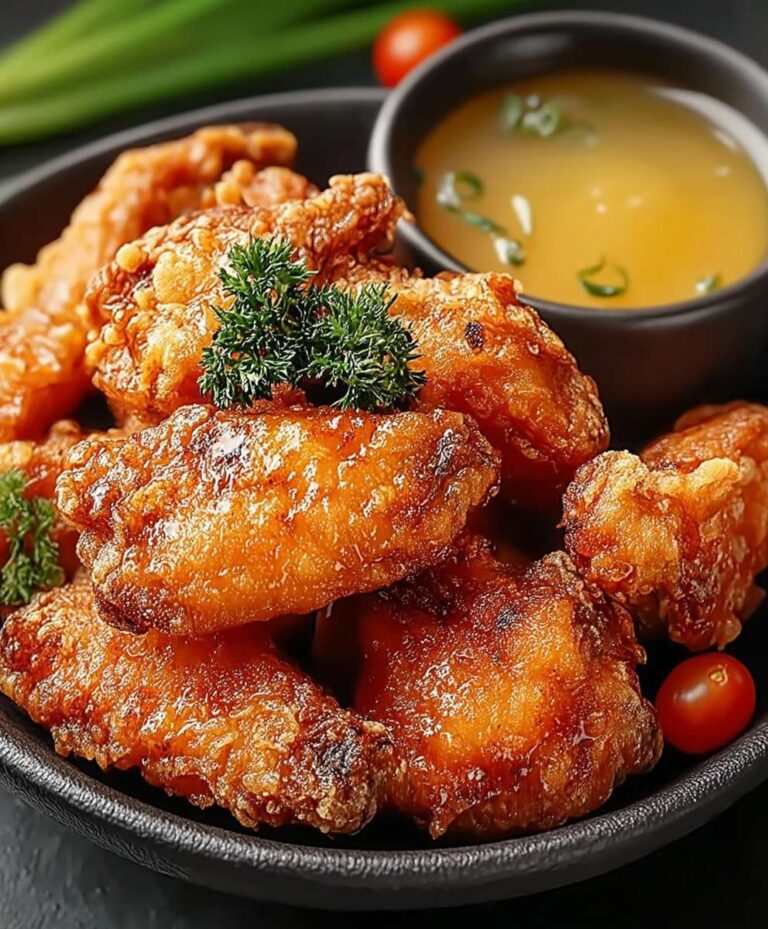
Japanese Fried Chicken (Karaage)
Master the ultimate Karaage! Juicy, skin-on chicken thighs marinated in soy, ginger, and a secret apple juice blend deliver explosive umami.
- Total Time: 35 minutes
- Yield: 4 servings
Ingredients
- Boneless, skin-on chicken thighs: 1.5 pounds
- Soy sauce: 2 tablespoons
- Apple Juice (Japanese cooking grape juice with vinegar): 1 tablespoon
- Grated fresh ginger: 1 tablespoon
- Grated fresh garlic: 1 teaspoon
- Salt: 1/2 teaspoon
- Potato starch (or cornstarch): 1/2 cup
- Neutral oil (for frying): 4 cups
Instructions
- Step 1: Cut the chicken into bite-sized pieces (about 1.5 inches each). In a large bowl, combine the chicken with the soy sauce, rice vinegar with water, grated ginger, grated garlic, and salt. Mix thoroughly to coat the pieces and let marinate in the refrigerator for at least 30 minutes, or up to 4 hours for maximum flavor.
- Step 2: Pour the neutral oil into a deep pot or Dutch oven, heating it to 325°F (160°C). While the oil heats, remove the marinated chicken from the fridge and gently toss the pieces with the 1/2 cup of potato starch until they are evenly coated, shaking off any excess.
- Step 3: Carefully drop half of the chicken pieces into the hot oil, ensuring not to overcrowd the pot, which would drop the temperature too quickly. Fry for 2 to 3 minutes until the exterior is pale blonde and the chicken is mostly cooked through. Remove the chicken pieces and drain them on a wire rack. Repeat this initial fry with the remaining batch.
- Step 4: Increase the oil temperature to 350°F (175°C) to prepare for the second fry. Return the partially cooked chicken (working in small batches) to the hotter oil.
- Step 5: Fry the chicken for an additional 60 to 90 seconds until the exterior turns a deep golden brown and achieves maximum crispness. Remove the finished karaage and drain excess oil before serving immediately with fresh lemon wedges or Japanese mayonnaise.
Notes
- Store cooled leftovers in an airtight container in the refrigerator for up to 3 days, separating them with parchment paper if stacking to prevent sticking.
- To revive the signature crispiness, reheat the karaage in a 375°F oven or air fryer for 5-7 minutes until hot and crackling, avoiding the microwave entirely.
- Serve this karaage alongside a quick sprinkle of shichimi togarashi (Japanese seven-spice blend) or a small bowl of tangy ponzu sauce for dipping.
- For the best authentic texture, ensure you use potato starch rather than cornstarch, as it delivers a superior light, airy, and shatteringly crispy crust after the double-fry.
- Prep Time: 15 minutes
- Cook Time: 20 minutes
- Method: Stovetop
- Cuisine: American
Nutrition
- Serving Size: 4-5 pieces (approx. 150g cooked)
- Calories: 480
- Sodium: 850mg
- Fat: 34g
- Saturated Fat: 7g
- Trans Fat: 0.1g
- Protein: 2g
Leave a Comment